




- May 5, 2026
- 0 Comments
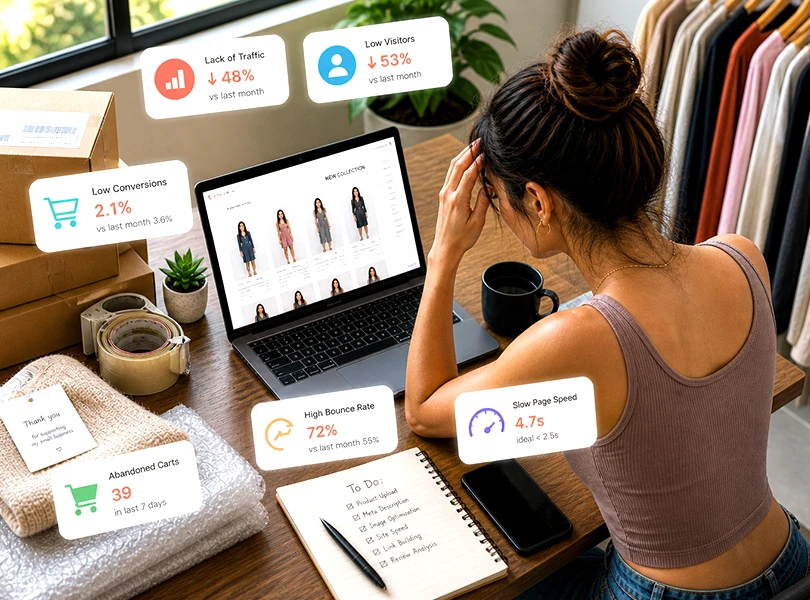
Most ecommerce businesses don’t fail because they lack traffic. They fail because the traffic they get doesn’t convert into customers.
In 2026, this gap has become even more visible. Search engines are sending more users than ever to online stores, but users are also more selective, impatient, and comparison-driven. Research shows that over 53% of users abandon a page if it takes more than 3 seconds to load, and average ecommerce conversion rates still stay around 2% to 3% globally, even though top-performing stores reach 4% to 8% above with proper optimization.
That difference is not luck. It is a strategy. And that is exactly what a strong ecommerce SEO strategy fixes.
Understanding Ecommerce SEO
Ecommerce SEO is the process of making your online store visible on Google when people search for products you sell. But there is a deeper layer most people miss.
It is not just about getting clicks. It is about making sure:
- The right people find your products
- They understand them instantly
- And they feel confident enough to buy
Think of Google as a massive marketplace. Your store is one shop inside it. SEO decides whether customers walk in, or scroll past without noticing.
In 2026, this matters even more because nearly 40% to 45% of ecommerce traffic still comes from organic search, making SEO one of the most stable long-term growth channels for online businesses.
Why Ecommerce SEO Strategy Matters More Today
A proper ecommerce SEO strategy is no longer just about keywords. It is about understanding user behavior.
For example, someone searching “running shoes” is still exploring options. But someone searching “buy lightweight running shoes for daily use” already knows what they want. The second user is far more likely to make a purchase.
This difference in intent is what separates stores that get traffic from stores that actually make revenue. A well-planned strategy focuses on matching your product pages with real user intent. When done correctly, it helps you not just increase ecommerce traffic but attract visitors who are ready to buy.
The Role of Product Page SEO Optimization
Product page SEO optimization means improving every element of that page so it ranks better on Google and helps users make a buying decision without confusion.
Your product page is the most important part of your entire store. It is where decisions happen. Product page SEO optimization simply means improving every element of your product page so it ranks better on Google and also convinces users to buy.
A high-performing product page does three things clearly:
- Explains what the product is
- Shows why it is useful
- Removes doubts before purchase
If a user leaves confused, the page has failed, even if it ranks on page one.
Most store owners think SEO is only about keywords. But in reality, a product page must do three things at the same time: explain, convince, and reassure. If a visitor lands on your page and still feels confused, the SEO has failed, even if the page is ranking.
The description also plays a major role. Many ecommerce websites simply copy manufacturer content, but that does not help SEO or conversions. A better approach is to explain the product in simple language, focusing on how it helps the customer rather than just listing features.
For example, instead of saying “advanced cushioning technology,” you could say “designed to feel soft even when you walk or run for long hours.” This makes the benefit clear to everyone, not just someone with technical knowledge.
Why Trust Signals Decide Conversions
In ecommerce, trust is everything.Even if a product is good and the price is fair, users will hesitate if they don’t trust the website. That is why elements like reviews, ratings, return policies, and delivery information matter so much.
In fact, studies across ecommerce platforms show that products with reviews tend to convert significantly better than those without them. This is because people trust other buyers more than brand messaging.
This is also why modern SEO for online store strategies always include conversion-focused design, not just ranking improvements.
Increase Ecommerce Traffic the Right Way
A common mistake is assuming all traffic is good traffic. It is not.
There is a major difference between browsing traffic which is usually low intent and buying-intent traffic which is high value.
For example:
- “best shoes” is research stage
- “buy waterproof running shoes online” is purchase stage
A strong ecommerce SEO strategy focuses heavily on the second category because it directly impacts revenue, not just visibility.
So when you aim to increase ecommerce traffic, the real goal is not volume, it is quality traffic that converts.
Shopify SEO Tips That Actually Make a Difference
If your store runs on Shopify, you already have a solid foundation. But Shopify still needs proper optimization to perform well in search results.
Avoid duplicate pages
One common issue is duplicate content caused by product variants. Without proper setup, Google may get confused about which page to rank. Fixing this using canonical tags helps maintain a clean SEO structure.
Keep URLs clean
Another important factor is URL structure. Clean and readable URLs perform better both for users and search engines. For example, a URL like “/products/blue-running-shoes” is much better than something random like “/products/item12345.”
Reduce extra apps to improve speed
Site speed is another major factor. Shopify stores often slow down because of too many installed apps or heavy images. Even a small delay in loading can impact conversions because users tend to leave slow websites quickly.
These simple Shopify SEO tips often make more difference than advanced technical changes.
Why Content Still Plays a Big Role in Ecommerce SEO
Product pages alone are not enough to bring consistent traffic. Content plays a supporting role.
Blogs, guides, and comparison articles help attract users who are still researching before buying. For example, someone searching “best running shoes for flat feet” may not be ready to buy immediately, but if your blog helps them, they are more likely to trust your brand later.
This approach builds long-term visibility and strengthens your overall ecommerce SEO strategy.
Technical SEO: The Invisible Foundation
Technical SEO ensures that Google can properly crawl, understand, and index your website.
It includes things like:
- page indexing
- broken links
- mobile usability
- site structure
A simple way to understand it: If Google cannot properly read your website, it cannot rank it, no matter how good your content is. Even small technical fixes often lead to noticeable visibility improvements over time.
Final Thoughts
At its core, ecommerce SEO in 2026 is about balance. You need visibility through search engines, but you also need clarity, trust, and a smooth buying experience once users land on your website.
A strong ecommerce SEO strategy combines keyword targeting, user intent, and conversion-focused design. When you optimize your product pages properly, focus on relevant keywords, and improve user experience, you don’t just increase ecommerce traffic, you build a system that consistently converts visitors into customers.
And that is what actually grows an online store.
FAQs
What is an ecommerce SEO strategy in simple terms?
It is a planned approach to help your online store appear on Google when people search for products, and guide those visitors toward making a purchase.
How does product page SEO optimization improve sales?
It makes your product pages easier to find on Google and easier for users to understand, which increases trust and improves the chances of buying.
Why is SEO for online stores important in 2026?
Because most online shopping journeys still begin on search engines. Without SEO, your products may never be discovered by potential customers.
How can I increase ecommerce traffic without paid ads?
You can do this through SEO, keyword optimization, content marketing, and improving your product and category pages for search visibility.
What are simple Shopify SEO tips for beginners?
Focus on clean URLs, fast loading speed, proper product descriptions, and avoiding duplicate content issues caused by product variations.