





- March 5, 2026
- 0 Comments
Content marketing has never been static. The shifts in consumer behavior, search technology, and platform dynamics reset what works, and what doesn’t, in every few years. In 2026, a strong content marketing strategy isn’t just a list of blog titles or social posts. It’s a connected ecosystem of content that educates, engages, and builds trust across every stage of the customer journey.
This guide lays out what actually works today, backed by industry trends, evolving search behavior, and the realities of how audiences consume content. Whether you’re a founder, in house marketer, or considering a content marketing agency to help scale your efforts, this is your playbook for real results.
Why Content Marketing Still Matters in 2026
Despite debates that blogging is dead, content continues to be one of the most powerful long term channels for growth. That’s still true for content marketing strategy 2026 because:
- Search engines and AI tools reward depth, relevance, and real solutions over surface level articles.
- Consumers are becoming more selective, tuning out generic messages and buying into brands that help them solve real problems.
- Content feeds every other channel like SEO, email, social media, video, communities, and even sales enablement.
A coherent content strategy still drives brand visibility, authority, and leads, but the how has changed.
Start with Clear Goals, Not Just Topics
A content marketing strategy in 2026 must begin with purpose, not production. Before writing anything, ask:
- Are we driving organic traffic, leads, or authority?
- Which parts of the funnel are we targeting: awareness, consideration, or conversion?
- What audience segments matter most?
This isn’t a philosophical exercise. Content built around clear goals performs significantly better because it’s tailored to real audience intent instead of generic topics.
Understand the Audiences You’re Trying to Reach
Years ago, knowing your audience meant creating a simple persona. In 2026, it means digging into:
- What questions they ask, and how they phrase them
- Which channels they spend time on
- What problems they need solved right now
Search intent is broader than keywords. Modern consumers want specific answers that match why they’re searching, not just what they’re searching for. Optimizing around search intent, informational, navigational, commercial, and transactional, is essential for ranking and engagement.
A great content marketing strategy is built on this level of understanding.
Produce Content That Solves Real Problems
In 2026, authority is earned by usefulness. People and search engines reward content that:
- Answers their questions completely
- Provides actionable steps
- Includes real examples, data, and context
This goes beyond listicles and generic advice. The best performing pieces today are long form, research backed content that becomes a reference for readers and a resource for other creators.
According to recent trend analysis, long, in-depth material topped performance benchmarks because it signals expertise and keeps people engaged longer, something both Google and AI discovery engines value.
Don’t Focus Only on Keywords
The days of keyword stuffing are long gone. In 2026, search optimization focuses on context, meaning, and answer centric structure. Traditional SEO is evolving into what experts call Answer Engine Optimization (AEO) and Generative Engine Optimization (GEO), strategies that optimize content for AI powered search and generative tools as well as traditional search engines.
This means:
- Structuring content with clear questions and answers
- Using semantic clusters instead of isolated keywords
- Building content that AI tools can understand and cite
Search engines are now designed to deliver precise answers. Writers and strategists must mirror that structure in their content.
Create Depth That Builds Trust and Authority
While short content attracts attention, deep content builds authority. Studies and recent industry guidance suggest that comprehensive articles of 1,500 to 2,000 words still outperform shorter content in search performance and trust building because they address multiple facets of a topic.
For example:
- Ultimate guides that cover definitions, examples, best practices, tools, and FAQs
- Case studies that include real results and insights
- Long term evergreen pieces that remain relevant
These formats signal expertise to both readers and ranking algorithms, especially when updated regularly.
Human Creativity overpowers AI
AI tools are now deeply embedded in the content process, from ideation to optimization. But audiences are increasingly smart. Overreliance on AI can produce bland, repetitive material that does more harm than good.
Most marketers use AI for:
- Research and trend discovery
- Topic clustering
- Draft outlines
- Editing and proofreading
However, human insight, tone, and judgment remain indispensable. Content that feels human with stories, style, and real experience, resonates far more than generic AI output. A disciplined content team uses AI as a partner, not a replacement.
Distribution Is Just as Important as Creation
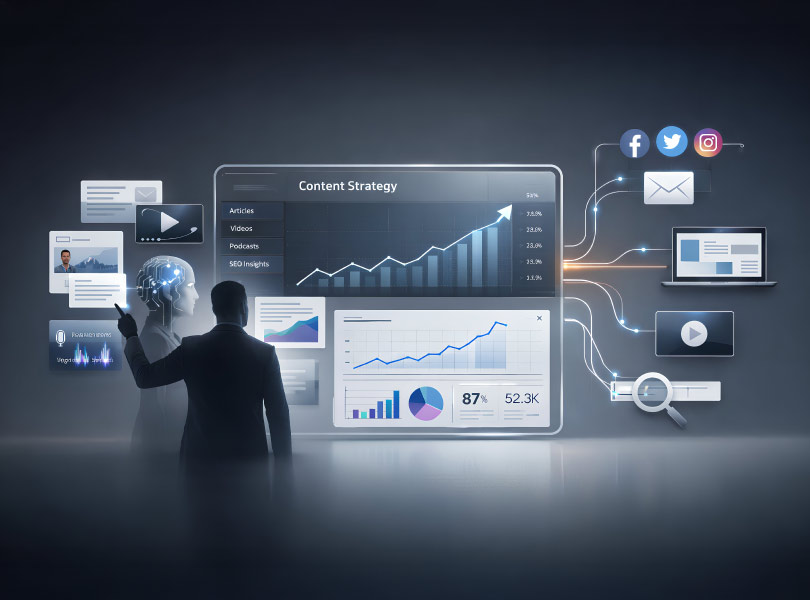
Publishing content is only step one. In 2026, strategic distribution fuels visibility and engagement. Top distribution channels include:
- Social media service platforms like LinkedIn, Instagram, YouTube, TikTok
- Email newsletters that nurture subscribers
- Communities and forums where audiences already engage
- Repurposing content into snippets, carousels, and short videos
Multichannel distribution ensures your content isn’t buried on a blog page; it’s everywhere your audience lives. A smart digital marketing agency will build a distribution calendar that maximizes the visibility of every asset.
Measure What Truly Matters
Good content marketing isn’t measured by Likes and Views alone. The strongest strategies focus on:
- Time on page and engagement depth
- Lead quality and conversion metrics
- Search visibility and SERP features
- Return on investment (ROI) from content assets
Metrics must align with your goals. Vanity numbers might make dashboards look good, but they rarely tell you whether your content marketing strategy is actually working.
Build Community for Ongoing Value and Engagement
Forward thinking brands are treating communities as content engines. Slack groups, Discord channels, LinkedIn communities, and other member spaces not only host conversations, they produce user generated content that fuels broader content strategies.
Community driven content:
- Increases credibility
- Boosts engagement
- Creates new ideas and assets organically
- Improves loyalty
Content isn’t just broadcast; it’s created with your audience.
Work with the Right Partners for Growth
You don’t have to do everything in-house. A reputable content marketing agency or SEO marketing agency can accelerate strategy execution by bringing expertise in:
- SEO and keyword strategy
- Content planning and production
- Cross channel distribution
- Analytics and performance optimization
- Team scalability
Choosing the right partner means matching not just services, but strategic vision.
Final Thoughts
A content marketing strategy for 2026 is more than a series of posts: it’s a value driven system that understands human intent, adapts to modern search dynamics, and delivers real outcomes. This strategy prioritizes audience needs, blends creativity with data, and extends reach through smart distribution.
If you focus on quality content, thoughtful optimization, and consistent engagement, you’ll build authority that lasts beyond any algorithm update, and that’s the real mark of modern marketing success.
FAQs
What is a content marketing strategy in 2026?
A content marketing strategy in 2026 focuses on creating helpful, intent driven content that builds trust across search, social media, and owned platforms. It combines SEO, distribution, and audience understanding rather than relying on volume alone.
Is content marketing still effective in 2026?
Yes, content marketing remains effective in 2026 because search engines and audiences reward depth, relevance, and real problem solving. Brands that focus on quality and consistency continue to see strong organic traffic and lead growth.
How does SEO fit into a content marketing strategy?
SEO ensures content aligns with search intent and is discoverable on Google and AI powered search tools. A strong SEO marketing agency integrates keywords, structure, and user experience without compromising readability.
What role does social media play in content marketing today?
Social media acts as a distribution and engagement layer, helping content reach wider audiences faster. A well planned social media service repurposes core content into formats suited for each platform.
Should businesses work with a content marketing agency in 2026?
Working with a content marketing agency helps businesses execute strategy consistently and at scale. Agencies bring expertise in SEO, content planning, analytics, and distribution that in-house teams may lack.