




- March 13, 2026
- 0 Comments
If you’re building a serious social media strategy for business, you’ve probably faced this question: should you invest more in paid campaigns or focus on growing organically?
The debate between paid social vs organic social isn’t about choosing a winner. It’s about understanding what each approach actually delivers and how it aligns with your growth goals. Businesses that treat social media as a structured digital channel rather than a content hobby are the ones that see measurable results.
Let’s break this down in a practical, strategic way.
Understanding Paid Social
Paid social refers to sponsored advertising on platforms like Meta, LinkedIn, TikTok, and X, where businesses pay to distribute content to a specific, targeted audience. Unlike organic posting, paid campaigns don’t rely on algorithms to decide who sees your content. You define the audience, set the budget, and control the objective.
This is where paid social becomes a performance lever rather than just a visibility tool. Most brands using a structured performance marketing service rely on paid social to drive leads, website traffic, conversions, or direct purchases. Every campaign is built around measurable outcomes such as cost per lead, return on ad spend, or acquisition cost.
The biggest advantage of paid social is predictability. If the campaign is optimized correctly, scaling becomes a matter of increasing budget and refining targeting. However, paid social is not a magic switch. Without strong creatives, compelling messaging, and a well optimized landing page, even a large budget will underperform.
Understanding Organic Social
Organic social is the unpaid content your brand publishes on its social profiles. This includes posts, reels, carousels, stories, and community engagement efforts. Unlike paid campaigns, organic growth is slower and requires consistency. Platforms prioritize content that generates engagement, which means brands need to create posts that genuinely resonate with their audience.
Organic social plays a different role in a digital ecosystem. It builds familiarity. It develops trust. It shapes brand perception. When someone discovers your business through an ad, they often check your profile before taking action. If your page is inactive or inconsistent, it weakens credibility. That’s why organic presence remains critical even for brands investing heavily in ads.
Organic social is not about instant conversions. It’s about long-term authority.
Paid Social vs Organic Social: The Strategic Differences
The difference between the two approaches becomes clearer when you evaluate them from a business perspective.
- Reach: Paid social delivers immediate reach. The moment a campaign goes live, your content appears in front of your defined audience. Organic social, on the other hand, depends on platform algorithms and audience interaction. Reach fluctuates and is rarely guaranteed.
- Speed: Paid campaigns can generate traffic and leads within days. Organic growth often takes months of consistent effort before meaningful traction appears.
- Targeting: Paid platforms allow granular filters such as location, age, behavior, interests, job titles, and retargeting website visitors. Organic posts are shown primarily to followers and whoever the algorithm decides to surface them to.
- Measurement: Paid social focuses heavily on revenue-based metrics. Organic social tracks engagement, saves, shares, and community growth. Neither is inherently superior. They simply serve different strategic functions.
When Paid Social Makes the Most Sense
Paid social becomes essential when speed and scalability matter. If you’re launching a product, entering a competitive market, or trying to generate leads quickly, organic reach alone won’t be enough. A well-executed paid campaign allows you to reach potential customers immediately instead of waiting for algorithm traction.
Ecommerce brands often rely on paid campaigns to drive consistent revenue. With proper audience segmentation and retargeting, ads can create predictable acquisition systems.B2B businesses also benefit from paid targeting, especially on platforms that allow professional segmentation.
Reaching decision makers organically can be difficult. Paid distribution solves that barrier. This is where a structured digital approach matters. Businesses that treat paid social as part of a broader performance marketing service see stronger results because campaigns are continuously optimized rather than launched and forgotten.
When Organic Social Delivers Greater Value
Organic social is powerful for businesses focused on trust and long term positioning. If your brand relies on credibility, education, or thought leadership, consistent organic content builds recognition. It allows potential customers to understand your expertise before making a purchasing decision.
Organic engagement also strengthens relationships with existing customers. Responding to comments, sharing insights, and maintaining active communication builds community. For early stage businesses with limited budgets, organic social offers a lower financial barrier to entry. While it requires time and creativity, it does not demand immediate ad spend.
The key is consistency. Posting sporadically weakens momentum. Strategic content planning is what turns organic channels into growth assets.
Why a Combined Strategy Often Works Best
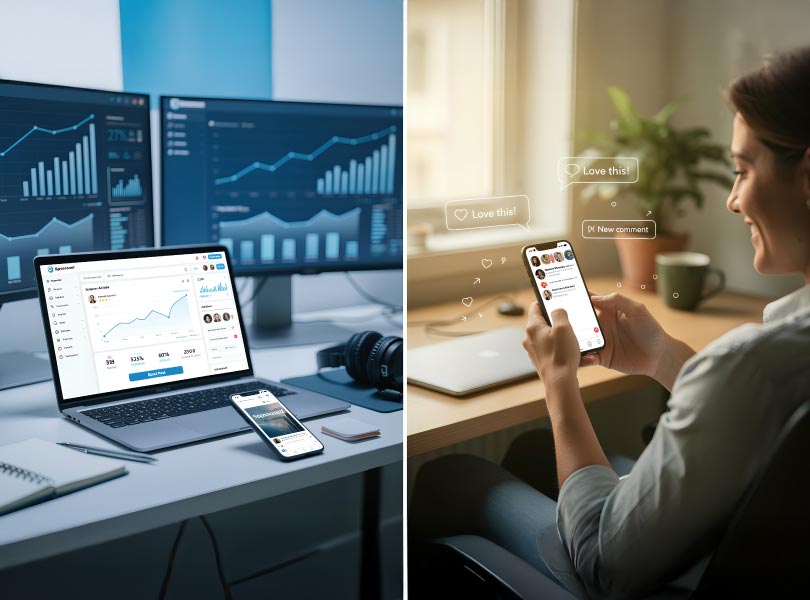
Framing this debate as an either/or decision can limit growth. The strongest social media strategy for business usually integrates both. Paid campaigns bring new audiences into your ecosystem. Organic content nurtures them.
For example, a brand might run targeted ads to generate awareness. Once users visit the profile, consistent organic posts reinforce authority and increase the likelihood of conversion.
High performing organic posts can also be repurposed into paid ads. This reduces creative guesswork because you already know the content resonates. Integration creates efficiency. Instead of operating in silos, paid and organic channels strengthen each other.
The Role of a Social Media Agency
Executing both paid and organic strategies effectively require structured planning, continuous optimization, and data-backed decision-making. A professional social media agency helps translate business objectives into measurable digital outcomes rather than isolated marketing activities.
Agencies manage the full ecosystem, from content strategy and creative development to paid campaign execution, audience testing, and performance analysis. More importantly, they ensure that every initiative aligns with revenue targets instead of vanity metrics like impressions or follower count.
Without accurate tracking frameworks in place, businesses often invest in ads without clear visibility into profitability. Strategic reporting eliminates that gap by connecting campaign performance directly to leads, conversions, and revenue impact.
As a digital marketing agency focused on performance driven growth, we’ve seen firsthand how integrating paid social with organic strategy creates compounding results. When campaigns are structured correctly and content is aligned with audience intent, social media becomes a scalable acquisition channel rather than an unpredictable expense.
How to Decide What Works Best for You
Choosing between paid social vs organic social depends on three factors: timeline, budget, and objective.
- If your priority is immediate revenue or lead generation, paid campaigns should take precedence.
- If your focus is brand awareness, credibility, and long-term audience building, organic social deserves consistent investment.
- For businesses in growth mode, a balanced allocation typically performs best. Paid social drives traffic. Organic social sustains interest.
The real mistake is neglecting strategy altogether. Random posting or unstructured ad spending rarely delivers meaningful outcomes.
Final Verdict
There is no universal winner in the debate of paid social vs organic social. Paid social offers speed, control, and measurable scalability. Organic social builds trust, community, and long term brand value.
The most effective businesses don’t choose one over the other. They build an integrated digital system where both channels support revenue growth. If your goal is sustainable success, the question isn’t which works best in isolation. It’s how strategically you combine them.
FAQs
What is paid social vs organic social?
Paid social involves sponsored advertisements targeted to specific audiences, while organic social refers to unpaid content shared on your brand’s profiles. Paid guarantees reach; organic builds credibility over time.
Is paid social better for small businesses?
Paid social can accelerate visibility for small businesses, but organic presence remains essential for trust. A balanced approach usually delivers stronger results.
How does a performance marketing service support paid social?
A performance marketing service focuses on measurable outcomes like leads and sales. It continuously optimizes ad targeting, creatives, and budgets to improve ROI.
Can organic social media generate leads?
Yes, but it typically works more slowly. Organic content builds authority and nurtures audiences, which can eventually convert into leads.
Should I hire a social media agency?
If you lack in house expertise or time, a social media agency can streamline both paid and organic strategies, ensuring campaigns align with revenue objectives.